


At our latest Social Profit Project Speaker Series event, Women Leading in Social Impact: Why It’s Working, we examined the conditions that make women’s leadership effective across complex cross-sector systems.
The evening opened with remarks from Jeni Piepgrass, President of Bespoke Social Profit Solutions. She spoke candidly about her personal commitment to building a safer, more equitable world and about a tension many in the room knew well:
“Women make up the majority of the workforce in the social profit sector, yet remain underrepresented in positions of authority and influence.”
But rather than centring the conversation on inequity, Jeni highlighted that despite structural barriers, women are still driving sustainable impact at scale. Across public, private, philanthropic and social profit sectors, women are building trust, stewarding capital with discipline, and advancing work.
For some, placing “women” in front of leadership can feel like narrowing the frame. We use it deliberately. Not as a qualifier, but as recognition that women often lead differently.
And when we look across complex social impact systems, that difference is showing up in tangible ways.
We see fewer disconnects between strategy and lived experience.
We see partnerships gaining traction in environments where collaboration often stalls.
In the rest of this article, we examine the leadership qualities and structural conditions driving this momentum, and explore how the sector can strengthen what is already working.
Women’s Leadership Is Not a Theme. It Is a Strategy.
Our keynote speaker for this event was Dr. Michele Fugiel Gartner, Researcher at Philanthropic Foundations Canada, whose work examines philanthropic and social impact systems and the people inside them who shape what becomes possible.
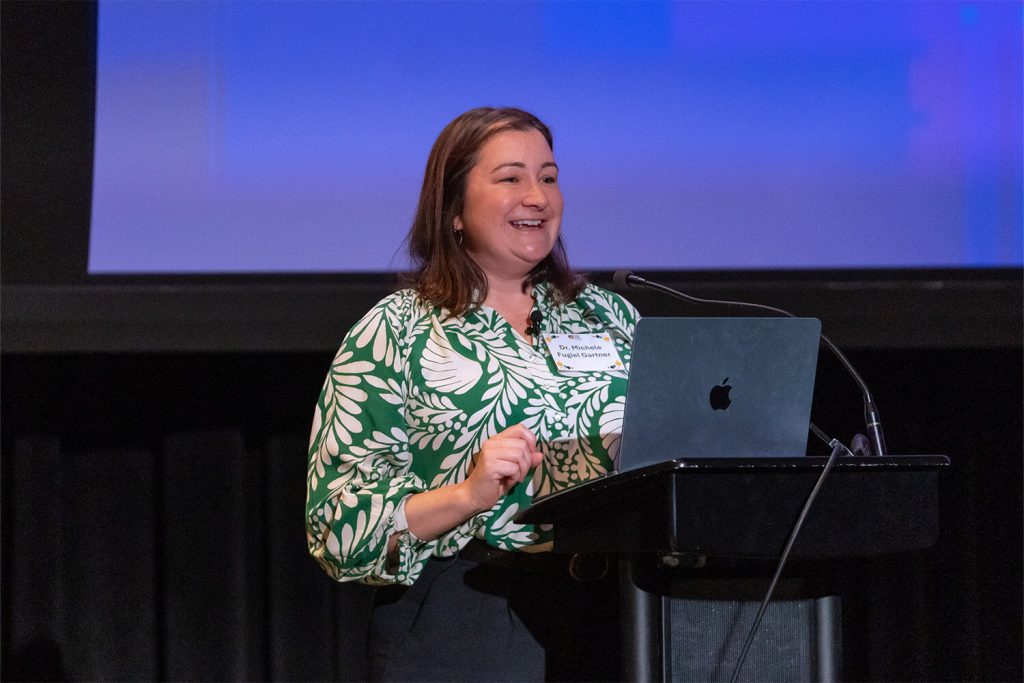
In her keynote, she extended the question Jeni posed at the outset. As she put it,
“The question isn’t whether women are leading. The question is: why is it working and what conditions are making it possible?”
That framing is particularly relevant today. The challenges facing our communities require leadership that is relational, adaptive, collaborative, and strategic.
Too often, organizations are defined by funding gaps, constrained resources, and limited authority. Yet scaling impact requires robust, resilient revenue models and the willingness to work collaboratively across diverse partners.
The Social Profit Project Speaker Series exists to advance that work. Bespoke’s founder, Jolene Livingston, envisions this forum as a space that convenes leaders across sectors to examine how governance, capital and collaboration can be redesigned to elevate the social profit sector and drive lasting impact.
The Strategic Conditions Behind Effective Women’s Leadership
In her keynote, Dr. Gartner outlined several conditions that explain why women’s leadership produces results in complex cross-sector systems. Let’s walk through them.
Proximity to Reality in Complex Social Impact Systems
In cross-sector collaboration, distance between those designing strategy and those delivering it shows up quickly. It shows up as stalled implementation, strained partnerships and communities still waiting for change.
Women leaders, Dr. Gartner explained, are often closer to front-line systems. As a result, they frame problems differently.
When you are accountable to the impact of a funding cut, a policy shift, or a delayed payment, strategy becomes less theoretical. You see who is affected. You hear what is not working. You feel the pressure of decisions in real time.
Proximity brings clarity. It makes trade-offs visible and keeps decisions connected to the people they affect.
Relational Intelligence as Leadership Infrastructure
If proximity grounds strategy, relational intelligence moves it forward.
Dr. Gartner framed it this way: “In social impact, relationships are the supply chain. Trust is infrastructure.”
In environments where authority and accountability are distributed, alignment is built through trust and maintained through relationships.
This insight surfaced clearly in Joy Bowen-Eyre’s reflections during our panel discussion. As CEO of The Alex Community Health Centre and a leader across public governance and health systems, Joy operates in highly complex, multi-stakeholder environments.
She spoke about reframing what had once been dismissed as a distraction into a leadership strength:
“I learnt to realize that my superpower is my relationships and I need not apologize for that anymore.”
Relational intelligence, in her experience, is how strategy advances.
Jerilynn Daniels reinforced this from a corporate investment perspective. As Regional Director of Community Marketing at RBC, she works at the intersection of capital and community.
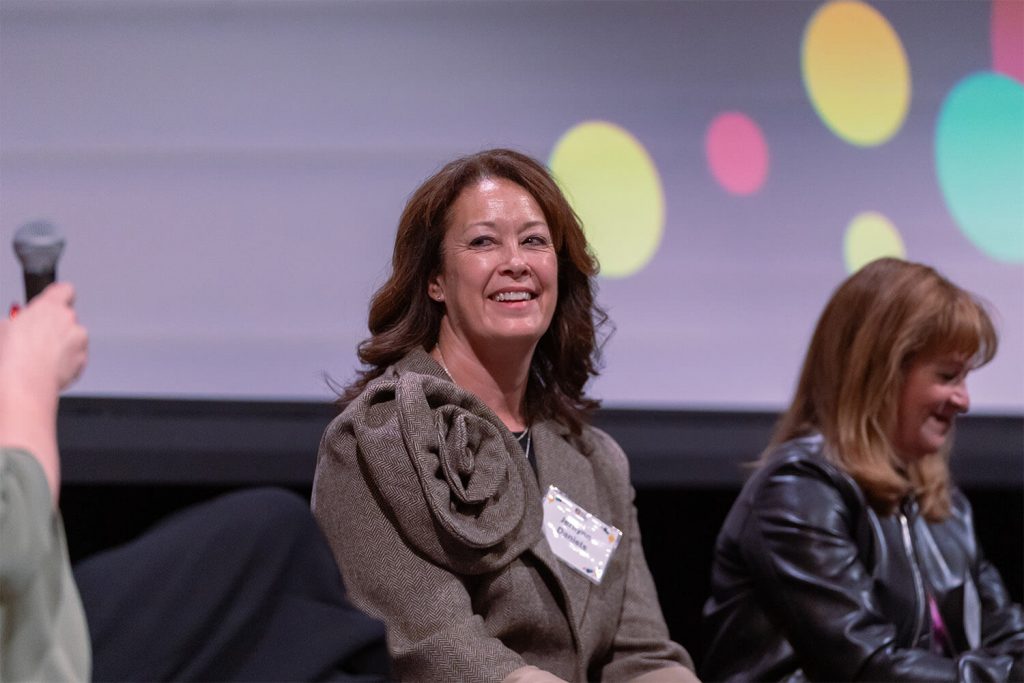
When presented with unconventional ideas, her instinct is curiosity: “You know what, that might work.”
That posture creates space for innovation rather than defensiveness. So, at the end of the day, you can co-create something that you’re proud of.
In cross-sector environments progress moves at the speed of trust, and strong relationships are what allow partners to move in the same direction.
Systems Fluency and Cross-Sector Leadership
Complex challenges do not live inside one organization or sector. They move across regulatory frameworks, capital markets, and policy environments.
Dr. Gartner emphasized that effective leadership requires systems fluency — the ability to understand how institutional pieces interact and to navigate between them with intention.
Shelley Kuipers illustrated this fluency through her work as Co-Founder and CEO of The51, a venture capital platform whose mission is to reshape economies by mobilizing women’s capital into ventures of the future.

She spoke candidly about operating within systems not designed with women in mind. When you are not given a seat at the table, you can allow it to limit you, or you can build a new table entirely.
Shelley and her team chose to build.
In doing so, she recognized that,
“When you’re building something for yourself over time, you realize you are building it for many, many people.”
That is systems leadership. Not adaptation for survival, but structural redesign for collective benefit.
Pragmatic Experimentation and Iterative Leadership
In environments shaped by funding pressures and public accountability, leaders cannot wait for certainty. They must test, assess and refine because standing still is not neutral. It is a decision with consequences.
This dynamic surfaced in Joy Bowen-Eyre’s reflections on leadership inside health and public systems. When her team brings forward bold ideas, her role is not to dismiss or rubber-stamp them, but rather to assess the tension.

During this process, Joy asks herself questions such as:
- What is real?
- What is possible?
- What is too far ahead of the system?
- What is not ambitious enough?
Pragmatic experimentation lives in that space between reckless risk and stagnant caution. It is how leaders move without pretending certainty.
Stewardship and Long-Term Impact Protection
Stewardship protects what matters most.
Leaders across sectors face pressure to expand scope, chase new funding streams, and respond to every emerging issue.
In some instances, Dr. Gartner noted, stewardship may look like simply saying no. But saying no to a priority that is not yours is not negativity, it is impact protection.
Stewardship means protecting long-term outcomes over short-term visibility. It means aligning capital and governance with core purpose rather than reacting to external noise.
From Individual Strength to Structural Support
If the evening made one thing clear, it is this: the fact that women’s leadership in social impact is working does not mean women are being supported.
In many cases, this leadership succeeds despite the system, not because of it.
Dr. Gartner posed a question that stayed with many of us: “What would be possible if women’s leadership was structurally supported rather than personally survived?”
This is not about representation alone. It is about institutional design, capital allocation and cross-sector governance alignment.
If you sit on a board, steward philanthropic capital, guide corporate strategy or shape public policy, you influence whether effective leadership is reinforced or quietly taxed.
Systems do not change because we celebrate exceptional leaders. They change because we redesign the conditions around them.
If women’s leadership in social impact is working, the next step is not applause. It is alignment.
Alignment that connects governance tables, capital structures and leadership pathways so the conditions driving progress are reinforced by design, not dependent on personal resilience.
Let’s build the infrastructure to support it.